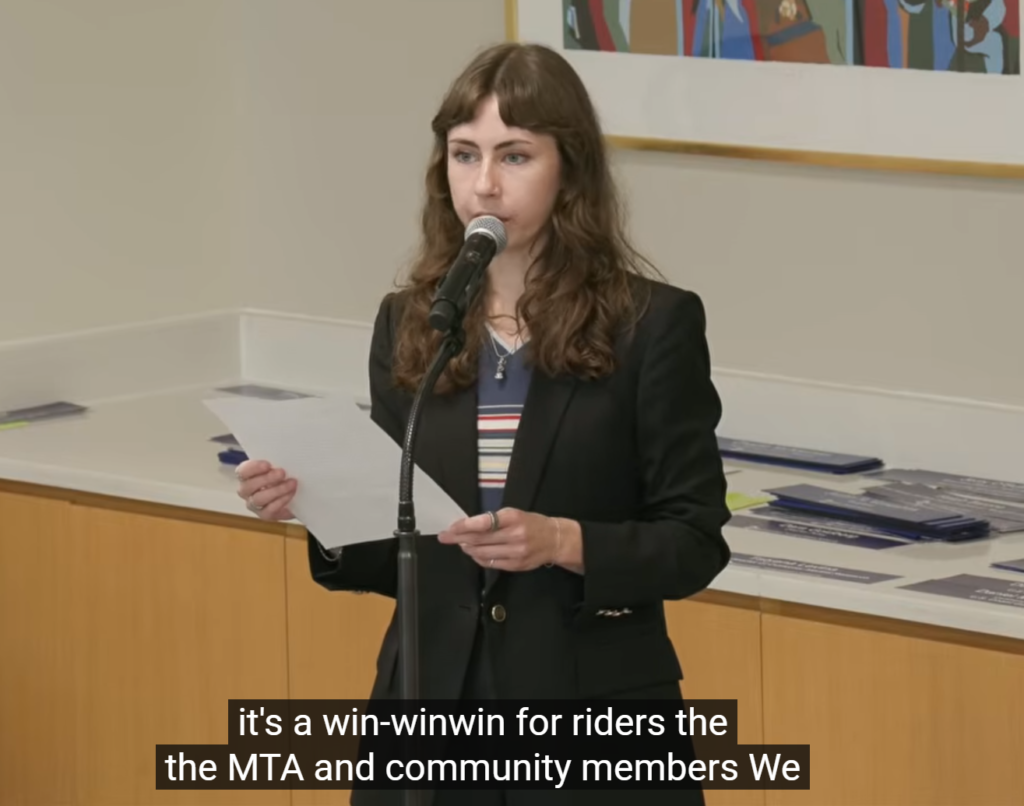
Good afternoon! I’m Kara Gurl, Planning and Advocacy Manager at the Permanent Citizens Advisory Committee to the MTA (PCAC).
Earlier this month, the Monitor Point proposal was officially approved by the City Council. The project resulting from the zoning change will allow for over a thousand much-needed housing units—many of which are income-restricted affordable units— and a park and museum on currently underutilized MTA-owned property. It will also relocate the MTA’s current Mobile Wash Unit and Emergency facility on the waterfront to a more appropriate industrial site. Importantly, revenue from this lease will raise funds that will be invested back into the MTA’s capital projects like accessibility upgrades, station improvements, and more. Overall, it’s a win-win-win for riders, the MTA, and community members. We hope to hear specific details about where these funds will be used so that we can tout the local benefits of TOD projects like this, just as we love celebrating the projects in the works that are funded by congestion relief. We’re already dreading whatever the USDOT has in mind for this successful program, but rest assured that every court case has been successful in keeping the cameras on.
Internationally, some of the best-funded transit systems that we look to for inspiration rely heavily on using development on transit agency-owned land to raise funds and reinvest in infrastructure. That helps those agencies provide excellent service and keep fares low with less support from their governments. Building housing that will reinvest in the trains and buses we depend on is mutually beneficial, and we hope it’s a model that can be used on other MTA-owned sites to keep transit affordable and well-funded for generations to come.
As you continue to deliver major improvements like CBTC work on the G and track replacements on the 1/2/3, it’s key that riders know about service changes well in advance of GOs so they can plan for alternatives. Communication channels like the Weekender newsletter and MTA service alerts are great, and we hope you’ll promote these tools even further so that more riders know where to look and how to plan. Thank you.